
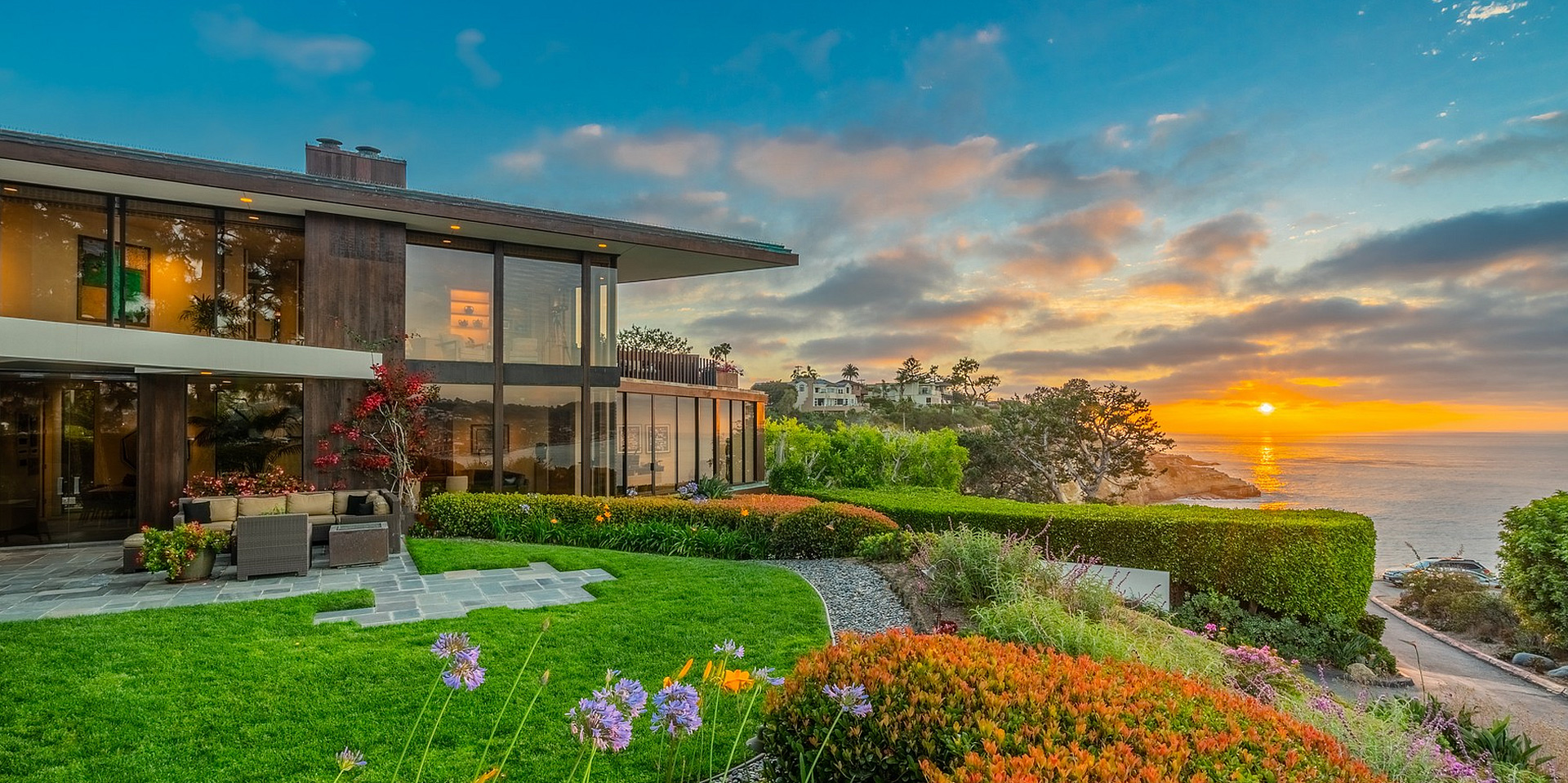
Market Guide · La Jolla
La Jolla: What Watching This Market Since the 1970s Actually Taught Me
What the village was, what it became, and where the money is genuinely well spent on the coast.
I moved to La Jolla when I was ten years old, in 1970. I went to Torrey Pines Elementary, Muirlands Middle, and La Jolla High, and I have been selling real estate along this coast since 1980.
This page is what I would tell you if you sat down and asked whether La Jolla is worth it. It covers what the town actually became, who is buying it now, the one appreciation number I trust and where it came from, what to check before you fall in love with a lot, the historic designation trap, and what I think is genuinely worth paying for here. Some of it argues against the most expensive thing on the street.
01What La Jolla was, and what it became
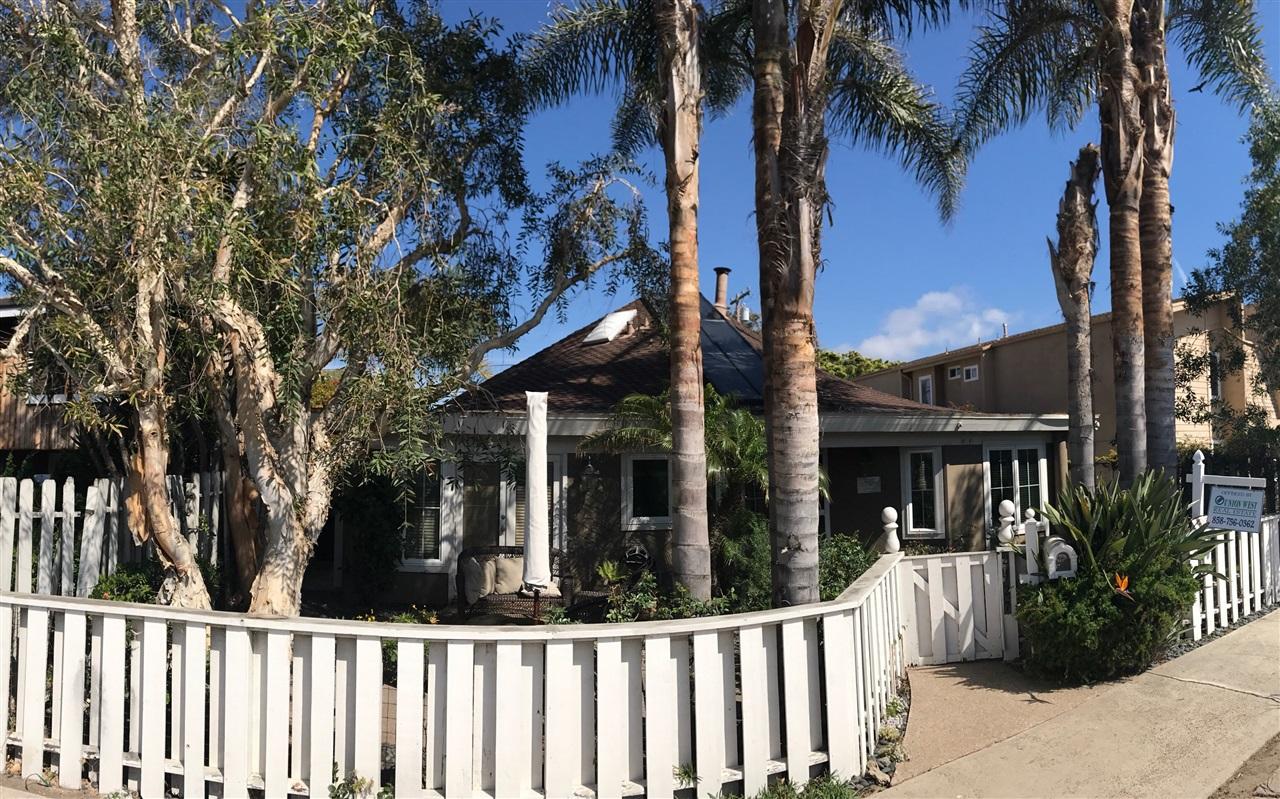
La Jolla always had international panache. Back when nobody could place San Diego on a map, everybody knew La Jolla, or thought they did. People would ask whether San Diego was near La Jolla. They had no idea it was part of San Diego. They had never heard of Del Mar, Encinitas, or Rancho Santa Fe. La Jolla means the jewel, and it has always carried an treasured status.
The beaches are as beautiful now as they were when I was surfing Black's and knew everyone in the water. Today there might be three hundred people out and I will not know one of them. That is the change. The beauty held. The crowd grew.
The shops were local. Classmates' parents owned the clothing store everybody shopped at and the grocery store everybody used. That is gone, replaced by souvenir shops, t-shirt shops more galleries and a much more commercialized village. The restaurants genuinely improved, because if you are not good here you do not last. Traffic was bad then and can be even more challenging now.
One honest note for families. When I was growing up near the YMCA a mile from UCSD, University Towne Centre and La Jolla Village Square did not exist. That was open space and we rode bikes and played in it. It is built out now, which is convenient because everything is there, but there is much less free land left for kids. The fields at La Jolla High are behind ten foot fences and only open when school is. The field where I grew up is fenced the same way. Cliffridge Park is still open, so on a weekend outside baseball season you can take your kids down and throw a ball around. The YMCA went from one pool to four and from a small gym to a large one, so that pocket is actually better than it was. For the rest of La Jolla, I would say the lifestyle for a child has stayed flat but still features the La Jolla Recreation Center and now La Jolla High School has a pool..
02Who buys La Jolla today
Honestly, this has not changed much.
You have international buyers who want a second home or a future retirement home. You have young families with a real connection to the place. I sold a house recently that sits four doors from the one I lived in as a fifth grader in 1970. The buyer's parents moved to La Jolla in the eighties, she was born and raised and schooled here, and now she is married with two young children and wanted them in that same school. Her parents live half a mile away. People relive their childhood here because they believe they grew up in paradise and they have the resources to go back.
Then there is the migration. People from Los Angeles, the Bay Area, and Orange County used to visit, like it, and still prefer their own market because it had more culture. Now they are weighing homelessness, traffic, and school quality, and they want a more stable environment. They come to San Diego to slow down without giving up quality of education or health care. On health care specifically, you cannot beat San Diego. Sharp Healthcare, Scripps Health, UC San Diego health, Salk Institute, Kaiser, the whole roster.
The economy underneath all of it is unrecognizable from the eighties. We were a military and defense contractor town. My father moved here to work at General Atomic. When a defense contractor laid people off, that was an event. Today you have Qualcomm, and the tech companies that need to be near Qualcomm, and a biotech sector that now ranks with Boston and the Bay Area as one of the three centers of that industry. One client of mine, who became a close friend, funded three hundred and sixty biotech companies here over the years. Add a deep bench of small technology startups and the result is a diversified economy where it is much harder for any single event to knock the market down.
03The seven percent number, and what it actually means
Every market has a number people repeat without knowing where it came from. Here is where this one came from.
I have tracked this personally for a long time, and I want to be precise about where it comes from rather than dress it up as somebody's index.
In the early 2000s I had a client who worked at Qualcomm, and those people are very good with numbers. He told me his house had appreciated at about seven percent a year. He had run it all the way back to when it first sold in the 1940s. I knew he was right, because I had done the same exercise on La Jolla properties twenty years earlier and came up with the same percentage.
Take almost any specific property along this coast, in La Jolla or Del Mar, go back to its first sale, and average it out. I will nearly guarantee you land in that seven percent annual range going back to about 1950.
That is why it behaves like a AAA bond for people who hold.
That is why it behaves like a AAA bond for people who hold. And it is part of why investors like this market even beyond the allure. La Jolla is still cheaper than Newport Beach, and less hectic than New York, and less expensive than the Bay Area or Los Angeles. I would argue it is better than most of them for most people.
04Before you fall in love with a lot
First, know what you are falling in love with, because the two cases carry completely different risk.
If you love the house as it stands, that is position A. That is low risk.
If you love the lot, the exposure, and the four thousand square foot house you can picture on it, then you need to understand every variable that determines whether you can actually build it.
Find out whether it sits in the La Jolla Shores Planned District. Find out whether it falls under the Coastal Commission, because on this coast it very often does. Find out whether it triggers hillside review. Find out whether it carries a fire impact, and whether the fire department is going to want more defensible space than the lot can give you if you are near open space.
Explore all of it before you close escrow. Not after. You may well find the lot is not as perfect as it looked, and the time to learn that is while you still have a contingency. Every one of those five checks can be answered before your contingency period runs out, and none of them get cheaper to answer later.
05The historic designation trap, and the Mills Act opportunity
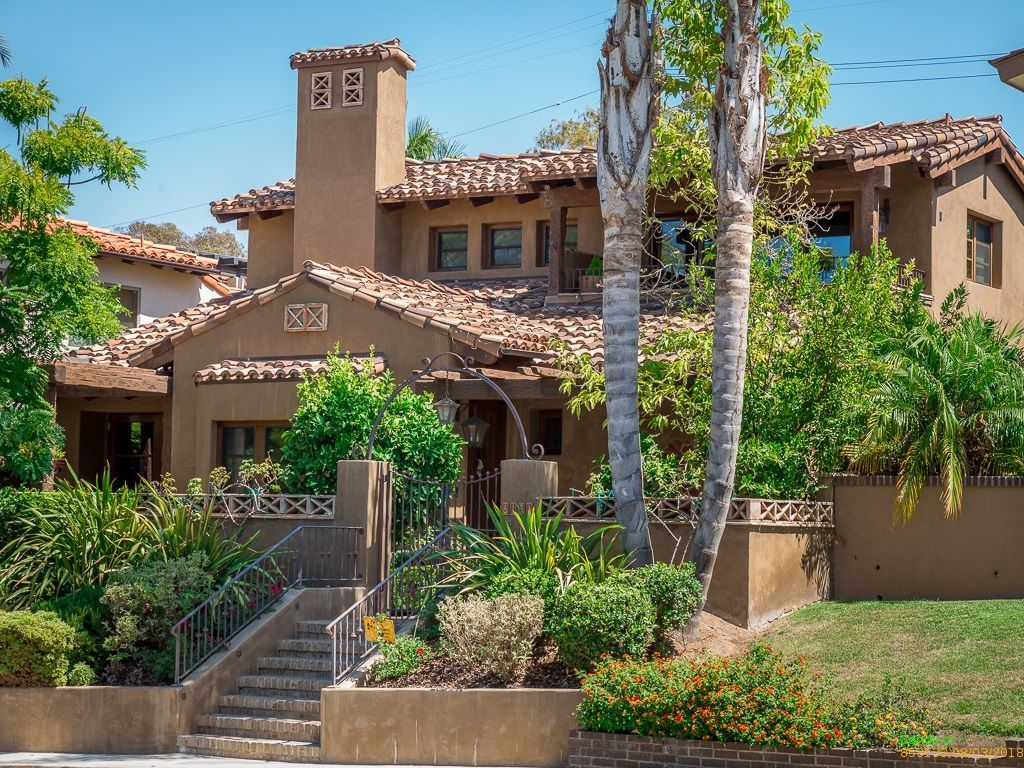
Over the last twenty years people have become very sensitive to the history of this area and its houses, and this cuts both ways.
The old rule of thumb was that a house under fifty years old was not historic unless it was designed by or owned by somebody famous, and if that person was still alive nobody cared. That is not where we are now. It does not take a Frank Lloyd Wright. It takes an architectural group that believes the designer was talented.
Many of the genuinely cool old houses in La Jolla are now fifty years or older. So before you buy one, make sure it will not be deemed historic, because if it is, you may not be able to easily make the changes you want and you certainly will not be allowed to tear it down. You can end up with a house nobody will let you make practical, and you have to learn to live with it.
Geography matters enormously here. In La Jolla you face three entities: the City of San Diego investigating it, plus local groups that will challenge you and want control of your project. Del Mar, as a city, rarely acknowledges residential historic designation at all. It is the only town I am aware of that takes that position, and it gives buyers there real freedom. I redesigned and resold a John Lloyd Wright house in Del Mar and the city did not fight us. Of course, during the contingency period we hired a Historic Real estate Attorney who researched and wrote a strong opinion as to why the property should not be considered historic. For Del Mar that is as close to guaranteed as you can get. Had that same house been in La Jolla, we would almost certainly would have been challenged about the historical designation and our proposed changes.
Now the opportunity. If a property is deemed historic, look at the Mills Act. It is a California program that lets a city or county offer the owner of a qualifying historic property a reduced tax assessment in exchange for a preservation agreement. Get it approved as a Mills Act property and you can take a very large property tax reduction in exchange for keeping the exterior facade immaculate and putting a plaque on it.
I owned a Lilian Rice row house in Rancho Santa Fe, one of the small houses built in the twenties for the workers who worked in the town, by the architect who designed most of the main Village (Lillian Rice). It is historic and you are restricted, but she was so good at it that I did not want to change anything anyway. I sold that property three times after I owned it. The third buyer got it designated. Example: the actual on a 2018 sale of the row house next to mine for $2,900,000 would have paid about thirty thousand dollars a year. Instead, it was billed $5,692.42 with The Mills Act. Of course, these assessments vary from property to property so be sure to research the actual benefit possible.
So if I find a candidate property that does not have the Mills Act on it, that usually means the seller and the agent do not know about it, and I can create instant value. On a three million dollar property that can be twenty seven thousand dollars a year, permanently. Enough people have figured this out that they are hard to find, but the best hunting may not be in La Jolla or Del Mar. It is in the communities where nobody thinks about it, because sensitivity to famous architects concentrates the search to the high end neighborhoods but opportunities can be anywhere.
06What is worth paying for, and what people overpay for out of emotion
Oceanfront is not worth paying for, for most people. You have to have unlimited money, because you need a team working on that house year round and it is enormously expensive.
The best lifestyle here, in my opinion, is up in the hills with a view and privacy. You get out of the coastal weather, the salt air, and the film that settles on your windows, your car, and your house. Get up in the air and you leave most of the negatives behind.
You can often sit above the fog, so the weather is better and it is less humid. The prevailing breeze comes from the northwest on a daily basis. So if you are facing south, that is ideal: you look north to clear skies, and in winter you can sit on a south facing balcony while the breeze passes by the house without hitting you directly. You get a temperate climate and almost no bugs, because moving air keeps them from settling.
The best lifestyle here, in my opinion, is up in the hills with a view and privacy.
Those subtleties are what separate a good buy from an expensive one. For me it is the south facing house on the hill, every time.
07How to actually live at the beach
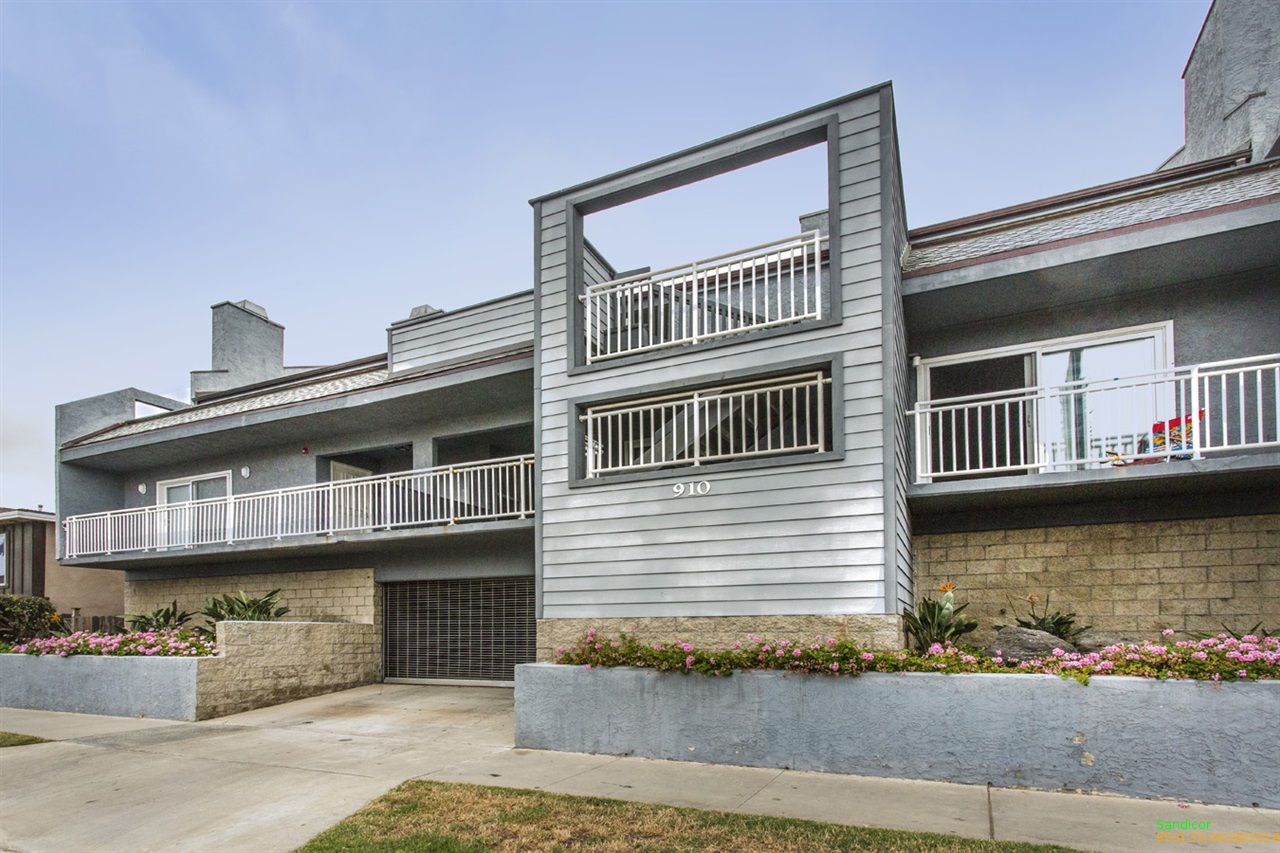
If the water is the reason you are looking here at all, there is a cheaper way to have it than buying it.
There is a smarter structure than buying the most expensive thing on the sand, and I have used it my whole life.
My first purchase was not in San Diego, because I could not afford San Diego in the early eighties. I bought a condo in Mammoth Lakes with two friends for eighty thousand dollars, about five thousand each in cash, because I love to ski. Then I bought a condo in Carmel Valley, lived there a year, and disliked the tract/suburban feel. So I rented that out to a young family and used the rent to lease a one bedroom apartment directly on the sand in La Jolla. I was living on the water without maintaining a building or carrying any of those costs, and I could still escape to the mountains.
That set the pattern for the rest of my life. I have always had two homes. I either rented where I wanted to live and owned where I wanted to vacation, or the reverse. Today the larger house is in Napa and the smaller one is here in Rancho Santa Fe outside the Covenant, and that is fine, because the escape is the Napa house and my business is here.
I have watched clients do the same thing well. One of them, an early Qualcomm employee, wanted the beach but did not need to be on the sand. He bought a lot on the west side of Camino Del Mar, hired an architect he liked, and built. He used it as a second home while living in Rancho Santa Fe. That is the way to live at the beach.
One more structural point, because it compounds. I am very good at 1031 exchanges, the rule that lets you roll the gain from one investment property into the next without paying the tax that year but simply deferring it. If you think long term and plan it out, real estate lets you build a great deal of wealth on paper without paying tax along the way, and your estate resets at market value when you die. Of course, your specific situation should be addressed by a tax professional, attorney or CPA.
08Where to start
If you are weighing La Jolla, the two questions worth answering first are whether you are buying the house or the lot, because they carry completely different risk, and whether you actually want to be on the water or simply near it. Most of the expensive mistakes I have watched people make here trace back to one of those two, answered late.
Scott Union
Scott Union grew up in La Jolla and has been selling real estate in La Jolla, Rancho Santa Fe and Del Mar since 1980.