
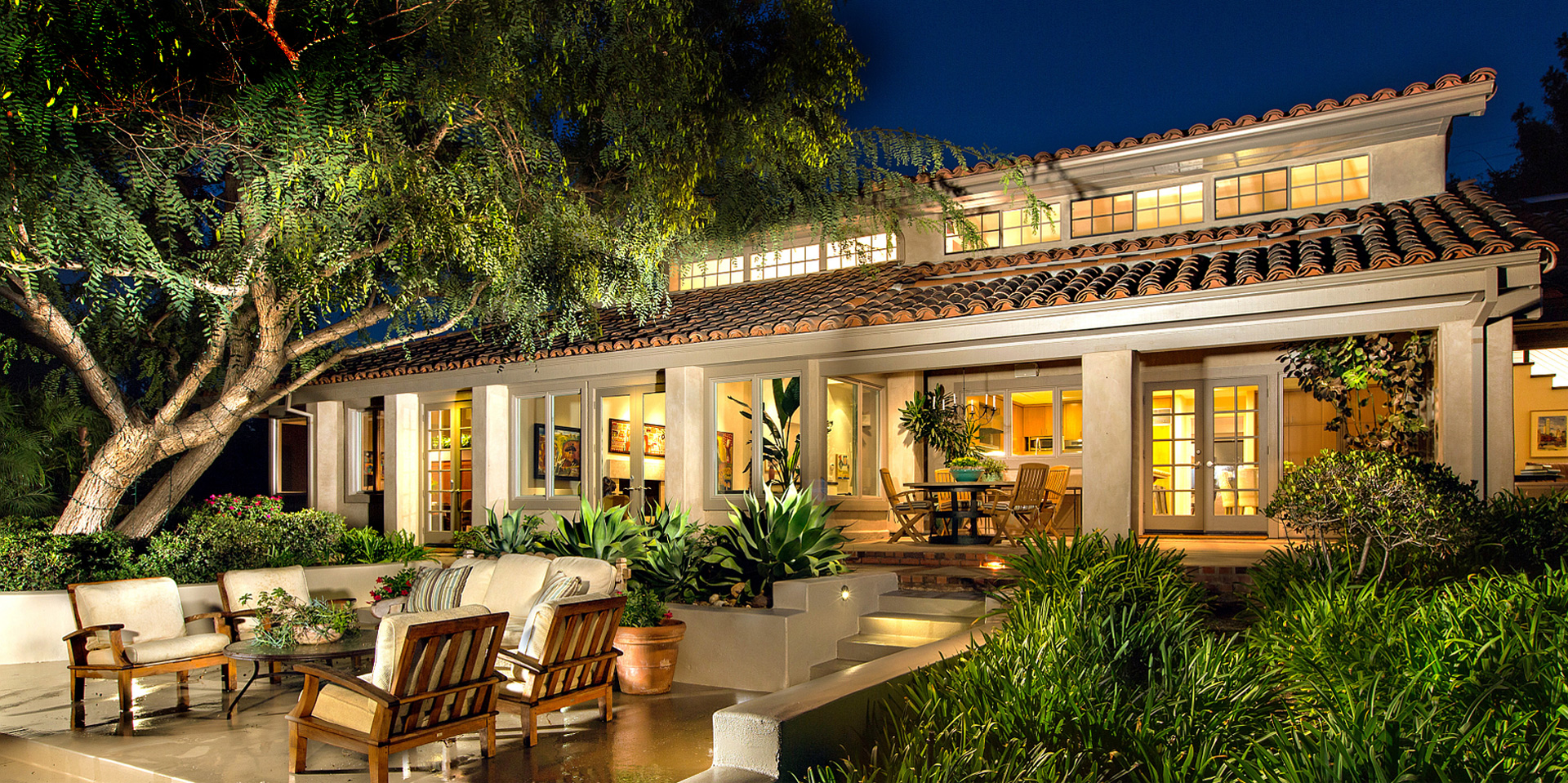
Buyer’s Guide · Rancho Santa Fe
Rancho Santa Fe: An Honest Read Before You Buy Here
Who this town genuinely suits, what it costs to get in, and the running costs that catch out of state buyers by surprise.
This page is what I would tell you across a desk if you asked whether Rancho Santa Fe is the right place for you. I moved here in 1988 and I am on my eighth house in town (7 in the RSF Covenant one outside in Del Rayo Downs), so none of what follows is read off a market report.
It covers who this town genuinely suits, what it costs to get in, how the Covenant differs from the gated communities around it, which address buys which school, and the running costs that catch out of state buyers by surprise. Some of it will talk you out of moving here. That is the point. I would rather lose the sale than sell you the wrong town.
01Who Rancho Santa Fe is genuinely right for
I moved to Rancho Santa Fe in 1988. I am on my eighth house here. So when I tell you who belongs in this town and who does not, I am not reading it off a market report.
The clearest fit is a family with young children who wants the school and wants space. If you are in the Rancho Santa Fe Covenant, the original deed restricted heart of the town, which runs its own association and sets its own rules, your children go to R. Roger Rowe, the public school that serves the Covenant from kindergarten through eighth grade, and it is genuinely excellent. That is the reason I came here. The golf course was nice now it's been transformed into amazing, and the social aspect of eating at the restaurant (all covenant owners are social members) was a truly unexpected benefit, but the school, attached community center delivered exactly what I moved for.
The second fit is anyone who needs quiet to reset. I grew up in La Jolla and lived in Del Mar before this. Those are tight lots, traffic, and neighbors close enough that there is always something happening in the background. What kept me in Rancho Santa Fe was coming home and feeling the stress drop off. I did not know that background noise was there until I was not in it anymore.
The golf course was nice, now it’s been transformed into amazing, and the social aspect of eating at the restaurant — all Covenant owners are social members — was a truly unexpected benefit. But the school and the attached community center are what delivered exactly what I moved for.
02What it costs to get in
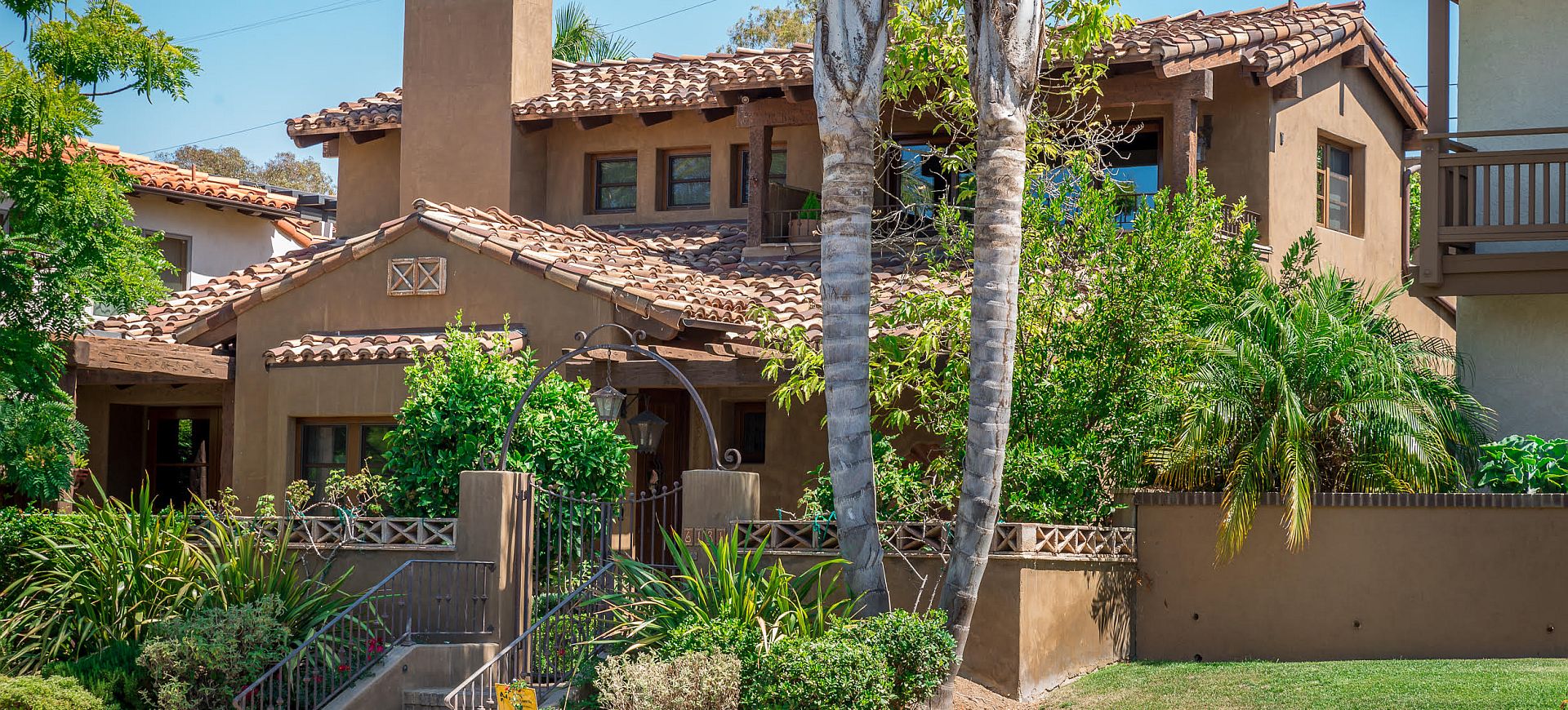
Fit is one question. What it takes to get in is a different one, and the two matter in that order.
In the Covenant right now, entry is roughly three to five million dollars. There is no practical ceiling above that.
For context on the surrounding markets, because most buyers are shopping more than one: in Carmel Valley you can get into an attached home from about one million to two million depending on whether it is a townhouse or a twin home, and single family homes start around two and a half and run to four and a half. You can go higher in any of these communities, but that is the comfortable band.
Del Mar, the 92014 zip code, carries about the highest price per square foot in San Diego. Land alone starts around three million, which means finished houses start around five. If you want to be on the beach there, you are starting at fifteen.
The pattern underneath all of those numbers is simple. The closer you get to the ocean, west of Interstate 5, the higher the price per square foot and the higher everything else. That line, east or west of the 5, comes back in almost every decision on this page.
03The Covenant, the gated communities, and the difference most buyers miss
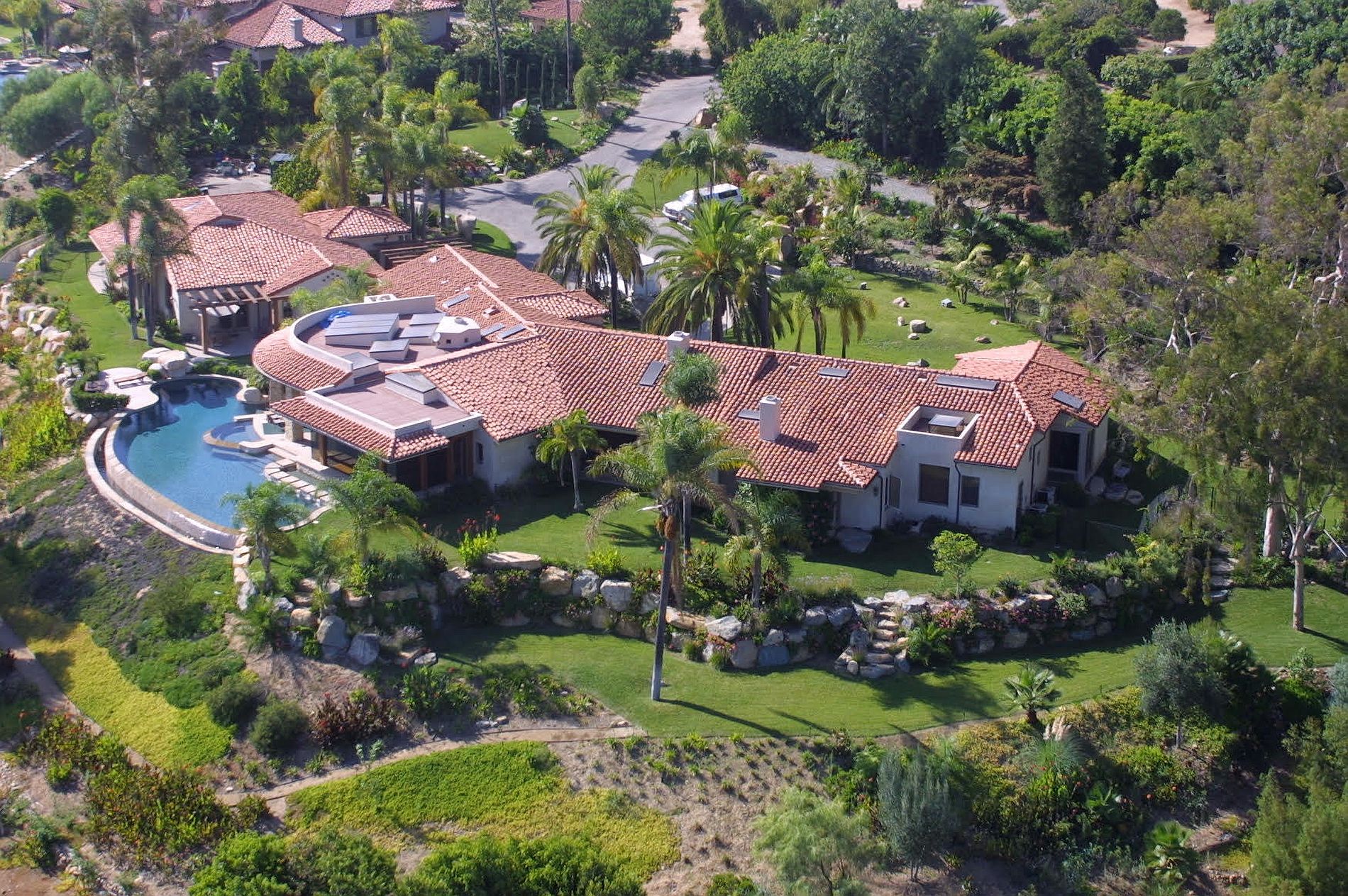
Entry price buys very different things depending on which part of town you land in, and the differences do not show up on a listing sheet.
The Rancho Santa Fe Covenant is unusual and worth understanding properly. Minimum lot size is two and a half acres, and the majority of parcels sit at 2.8 acres or larger. There are exceptions closer to the village and on a couple of cul de sac streets where they platted half acre and one acre parcels.
The Covenant maintains a fifty+ mile trail system for residents. Property ownership includes a social membership in the golf club. There are roving patrols, because this was one of the first homeowners association in the state of California and it has accumulated a set of features nothing else here matches.
So it operates like a gated community without being gated. You do not check in or check out. There are no gates. What you have instead is the Rancho Santa Fe Patrol. When we traveled, we gave them our dates. They knew we were gone. We registered our vehicles and plates, and if they saw a car that was not on the list they pulled over and checked it. We always felt secure in that ungated setting.
Then you have Fairbanks Ranch and The Farms, which are genuinely gated. Your guests give their name at the gate, stop, talk to a guard, and drive through. Some people love that. It was never my style, and I will admit the irony that I now live in a small gated community of sixty homes, because we left the Covenant in 2023 and this is our retirement house.
On property type: equestrian is a Covenant thing, because you need two acres to keep a horse. Fairbanks Ranch solved that differently by building an equestrian facility inside the gates, which is a smart setup. Most Fairbanks homes sit on about an acre, rarely one flat acre, usually hills and valleys, with houses in the five thousand to seven thousand square foot range, plus a clubhouse, tennis, and a lake. We kept two horses for my daughter and never boarded them at home. Riding was a before school or after school activity.
04Schools, and the one thing only the Covenant buys you
This is the single most common reason people pay to be inside the Covenant rather than beside it.
You essentially have to be in the Rancho Santa Fe Covenant to attend R. Roger Rowe. If that school is the point, the Covenant is, with limited exceptions, the only address that gets you there.
Outside the Covenant you are in whichever district you land in. Fairbanks Ranch and The Farms fall under Solana Beach. Del Mar and Solana Beach are effectively similar because they are joined. On the north end, toward Olivenhain and Encinitas, you are into La Costa Canyon and a district closer to Encinitas & Carlsbad.
The schools across La Jolla, Del Mar, Solana Beach, Rancho Santa Fe, and Encinitas are almost uniformly rated nine or ten. Most are ten.
Here is the part families underestimate. Your elementary school is fixed by where you live, and you are assigned one high school. But if you are in Olivenhain, Rancho Santa Fe, Carmel Valley, Del Mar, or Solana Beach, you can choose among four high schools: Torrey Pines, Canyon Crest Academy, San Dieguito Academy, and La Costa Canyon. Canyon Crest is the newest and has been recently ranked #122 or less Nationally, 14th in California and #1 in the San Diego Metro area, by U.S. News & World Report and Newsweek.
There are also strong private options, from Cathedral Catholic, Santa Fe Christian, Francis Parker, La Jolla Country Day, The Bishops School, and several more targeted programs. They run from about eleven or twelve thousand dollars per student to fifty thousand. I never personally understood paying it when the public schools here are this good. My daughter went through Roger Rowe, then Oak Crest, then San Dieguito Academy.
05The costs almost nobody budgets for
This is where out of state buyers get hurt, and it is the single most useful thing I can tell you.
The minimum lot in the Covenant is two and a half acres. If you retire here from somewhere else and you do not understand what it takes to maintain a property that size, the water, the utilities, the labor, the cost may overwhelm you. You pay to play.
Real numbers from my own houses. I built a place here with a lot of lawn. Beautiful, everything new. Between the gardener and the water to maintain it, in 2008, we were at five thousand dollars a month.
So we bought a comparable property with an older house, fenced comfortable area for kids and dogs, small grass area, large hardscape view patio and left the rest primarily natural. By the time we sold in 2021 we had that cost down to about sixteen hundred a month with the same gardener I still use today, and the water was running four to five hundred a month instead of a thousand-plus.
That is the whole lesson. Leaving land natural or going to hardscape is not a compromise. It is the smart play, and with the fire situation it doubles as defensible space. On our Napa property we have twenty acres. I weed eat it down to dirt, fence roughly an acre around the house for the dogs, keep most of the perimeter dirt as defensible space, put lawn only near the house (fortunately we have a well so water is manageable), and hardscape the rest. Completely controllable.
Then there is insurance. The fires have made it genuinely challenging, and it belongs in your budget conversation before you write an offer, not after.
You pay to play.
06Reading the land: orientation, valleys, and microclimate
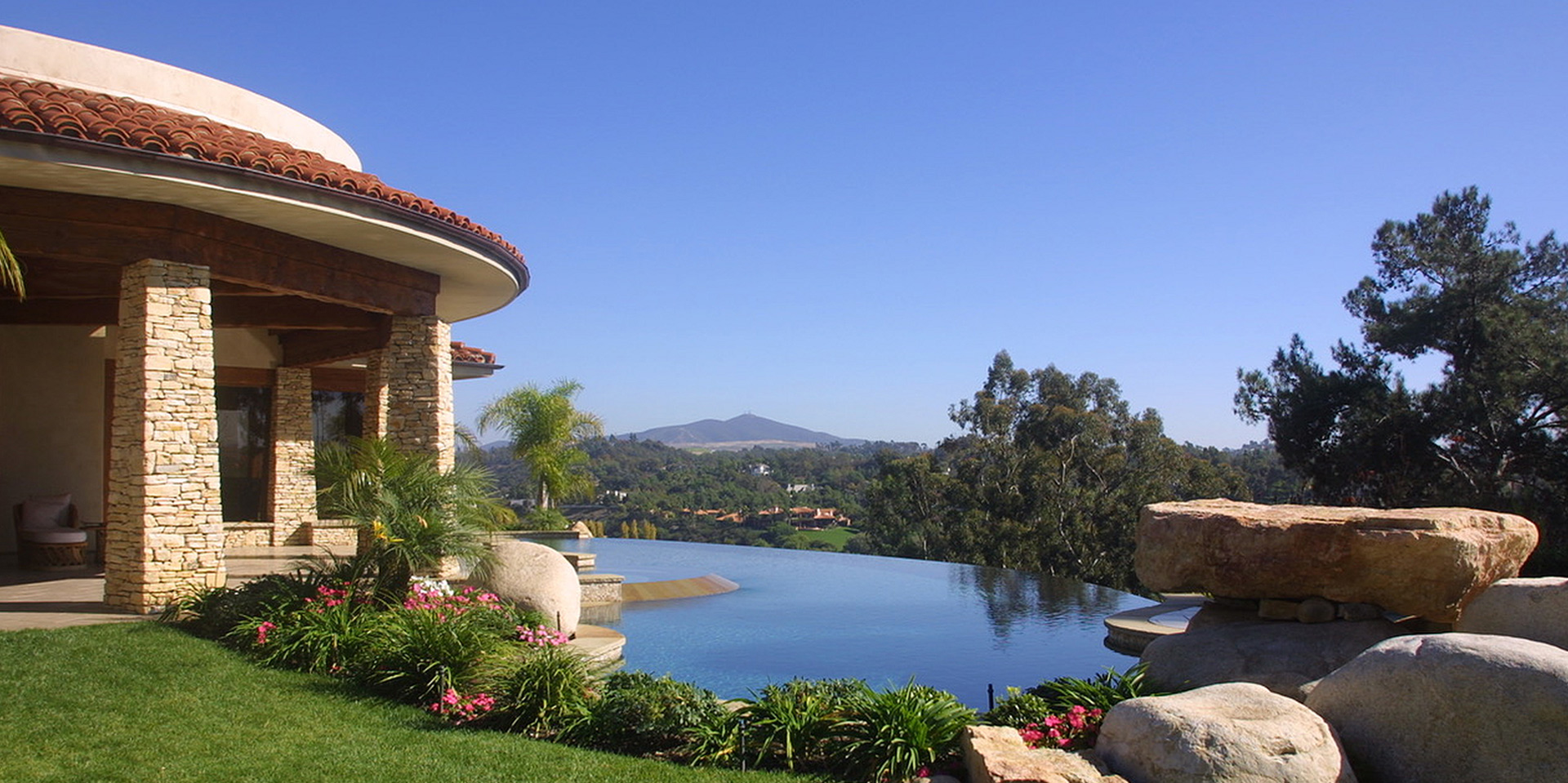
Two houses a mile apart here can live completely differently. This is the part of the tour that no listing photograph will show you.
Within a place like Carmel Valley the only real variable is whether you are on a busy street or not or off a cul-de-sac. It is mostly flat, two developers originally with five to seven models each, so the houses are similar and you can figure out your favorite neighborhood fairly quickly. Fortunately many new developments have been built to the south and east offering more options but many people still prefer the original neighborhoods due to their convenient location to beach and freeways.
Rancho Santa Fe does not work that way, and neither do La Jolla, Solana Beach, Olivenhain, Del Mar, or Encinitas. The specific location varies dramatically, and buyers underestimate how many subtle differences there are.
If you are near a valley and sit low, you may get large temperature swings. You will wake up and it is twenty degrees cooler than when you went to bed, purely from the elevation difference. At my first house the driveway sat below the house. Walking down for the paper in the morning was a seven to ten degree drop. In summer, you welcome it. In winter it is a shock.
Sitting low also means the breeze may never reach you. If the air does not move, you get mosquitoes and everything that comes with still air.
Orientation matters more than almost anything on the tour sheet. Facing south with a pool gives you sun all day. A kitchen facing east gives you sunrise, which is a very good way to wake up, and the same is true of a primary bedroom if you like waking with light. Facing west, away from the coast, is generally just bad: the low sun at sunset comes straight through the glass, hits you in the eyes, and heats the room. In La Jolla, everybody wants the ocean view so the houses face west, and they do not think about the fact that at sunset the shades will be drawn and they may not even see the view.
Facing north with tall glass, if you have privacy, means you may never need a window covering. In Napa, we deliberately built the front courtyard facing north and gated it, so it is private and there is almost no window treatment in that part of the house. Walking through it, you feel like you are outside and completely safe. We enjoy the same thing here in Del Rayo Downs: courtyard north, backyard south.
07The factors most buyers never weigh until after they have moved in
This is not a list of who bought wrong. It is a list of the variables that get skipped in the excitement of a purchase, and any buyer, careful or not, can skip any one of them.
Acreage maintenance is one: the out-of-state retiree who wants space and never runs the water and gardening numbers before closing. Weather exposure is another: the buyer drawn to beach proximity who has not priced what salt air does to a house and a car over time. School zoning is a third: the family that assumes every address in the area buys the same school, when the boundary can split a single street.
If you are close to the ocean you get salt air and you get coastal fog, especially the April, May, and June gloom everybody has heard about. That is a real thing. In the seventies and eighties I rented a place oceanfront and the salt nearly rusted through my old Porsche in two years. The maintenance on or near the water is relentless. You are painting and replacing essentially every year. It is close to owning a boat.
Live east of Interstate 5 and you get normal weather without the fog or the corrosive elements. Anything west, and depending on how close you are to the water, you deal with it to some degree. None of that makes the coast a bad buy. It makes it a budget you have to enter with your eyes open.
08How I actually work this market
I am a control freak about markets. If I do not understand an area, I do not sell in it.
La Jolla I know because I moved there at ten years old and went to Torrey Pines Elementary, Muirlands Middle, and La Jolla High. When I got my driver's license at sixteen I delivered for a liquor store, which put me inside a remarkable number of those houses. I knew that market cold long before I was licensed to sell in it.
Rancho Santa Fe was different. I moved here in 1988 as a value play and I did not show my first house here for seven years. It was that complicated. No street lights, country roads, two and a half acre parcels, and you can get lost very easily. So I ran the trails and drove it in daylight until I knew it.
The one time I got it wrong, I met a client at five o'clock on a short day and it took me forty five minutes to find a house that should have taken ten. He asked how long I had been a Realtor. I had to say seven years here and ten before that. He said he would have expected me to know how to get to the house by now. That was the last time that happened.
I do not show anything in any area that I do not know cold. I give advice people do not want to hear, and they come back and thank me for it.
I do not show anything in any area that I do not know cold. I give advice people do not want to hear, and they come back and thank me for it.
09Where to start
If you are considering this area, the useful first conversation is not about houses. It is about which of these tradeoffs you are actually willing to live with: the school you are buying, the side of the 5 you want to be on, and the number you can carry every month after the purchase is done. Bring me those three answers, or bring me the questions, and we can rule out most of the map in an afternoon.
Scott Union
Scott Union has been selling real estate in Rancho Santa Fe, La Jolla and Del Mar since 1980. He moved to Rancho Santa Fe in 1988 and is on his eighth house in town.