Why I Now Tell Clients to Buy a Four Thousand Foot House Instead of Building One
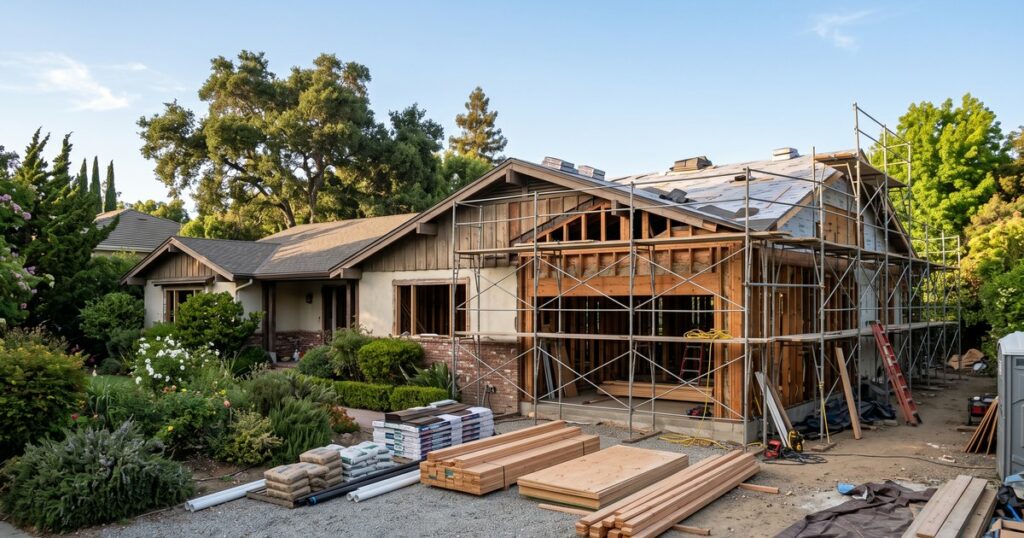
I have built two houses from the ground up and renovated more than I can count, for myself and for clients. So when I tell you not to build, understand that I am arguing against the thing I know how to do. The cost to build a custom home in San Diego has moved far enough that the advice I give today is the opposite of the advice I gave for twenty years.
Summary. Ground up custom construction on the San Diego coast now runs over one thousand dollars a square foot and takes two to five years. Buying an existing house and gutting it can deliver comparable space for roughly five hundred dollars a foot. Securing approvals before demolition also preserves a lower property tax basis.
What Ground Up Construction Costs on the Coast Today
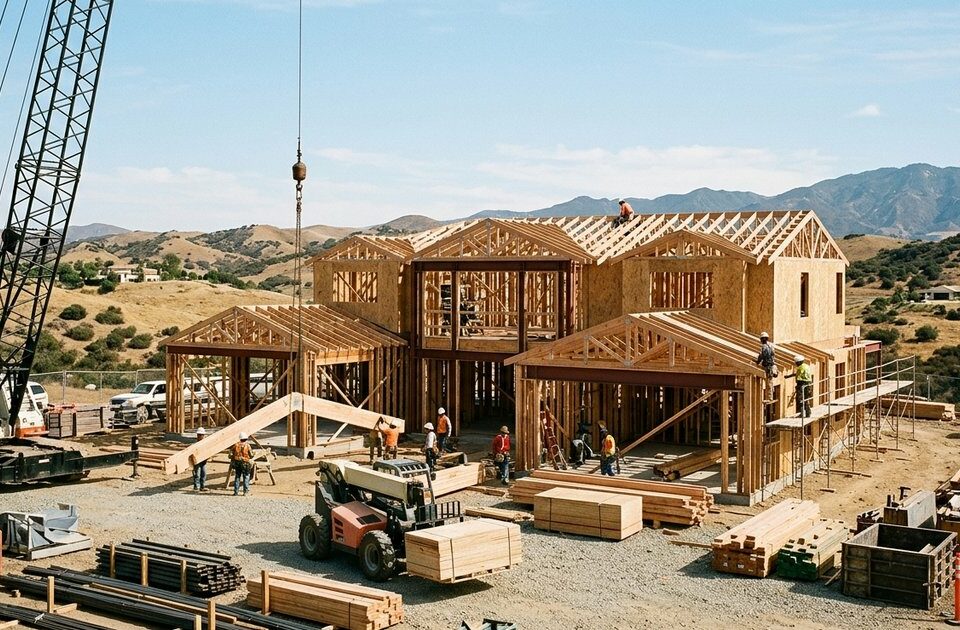
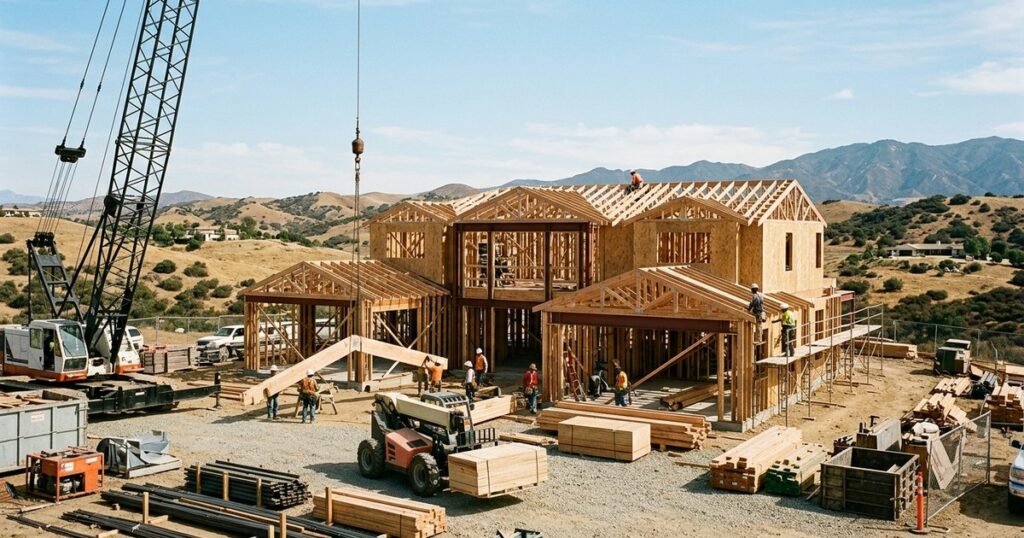
Any custom home going up right now, built correctly, is over one thousand dollars a square foot. Built correctly means structural and soils engineers, a builder who is genuinely good, and the full approvals process rather than a shortcut through it.
It also means time. A project of that kind takes a minimum of two years and realistically three to five from the point you acquire the parcel.
When we finished our own house in Napa it came in at twelve hundred dollars a foot. My builder told me at the time that if we broke ground again the day we finished, the identical house would run twenty five percent more.
In the years since I have watched for relief and not found any. Labor has not come down. Materials have not come down. Every so often there is a headline about lumber softening, and it is either temporary or it simply did not climb as fast as everything around it.
The Arithmetic That Changed My Advice
Here is what I now tell nearly everyone who tells me they want five thousand square feet.
Do not build five thousand square feet. Go find a four thousand or a six thousand foot house that already exists, and gut it, and make it exactly what you want.
If you want five thousand square feet, find a four thousand square foot or six thousand foot house that is already out there and just gut it and make it how you want it, because you may be able to do that for five hundred to six hundred a foot instead of a thousand a foot.
Scott Union, Compass – Union West RE Group
You are getting roughly fifty cents on the dollar, and you are getting it two or three years sooner. On a project of this size, the time saving is not a secondary benefit. It is frequently worth more to the owner than the money.
What this really means is that the market has circled back to the one I came up in during the 1980s, when you could buy something, fix it, add real value, and come out ahead. That window closed somewhere around 2000 and stayed closed until roughly 2019. It is open again.
Why This Is the Future of the Upper End Here
The reason is arithmetic rather than taste.
A great many buyers cannot write a check for a twelve or fifteen million dollar house, but they very much want to be at that address. If finished product in a neighborhood is trading between one thousand and two thousand dollars a foot, and you can acquire a property needing work at five or six hundred and put another two hundred fifty to five hundred into it, you have bought the location for a fraction of what building it would have cost.
There is a second effect that is less obvious. Truly well built product rarely reaches the open market in the first place, because an owner who has spent three years building something correctly does not want it treated like an open house. That scarcity at the top is part of what makes the renovation path competitive rather than second best. The full building and remodeling guide covers how those properties actually change hands.
The flipper market at the lower price points, the carpet and paint version, still works exactly as it always has. What has changed is that the same logic now applies at the top of the market, where it did not for two decades.
The Approvals Sequence That Lowers Your Tax Basis
This is the piece most buyers get wrong, and it is worth real money permanently.
If you intend to redevelop, secure your approvals with the existing house still standing. Doing it in that order produced two advantages on my first project here. I received credit for the existing structure against school fees. And when the county reassessed, it charged me only for the square footage I added rather than the value of an entirely new house.
The practical result was that my basis moved from one and a quarter million to two and a half million on a finished house worth around five and a half. Had I built new, the assessment would have landed near five million and I would have paid property tax on that figure every year afterward. California assessment rules are summarized by the State Board of Equalization at boe.ca.gov.
Then there is the lesson I got wrong on that same project. By the end, the cost of remodeling around what was already there had climbed past the point where it made sense. Knowing what I know now, I would have taken the approvals with the house in place and then demolished before building. It would have been cheaper, faster, and far more flexible.
Assessment and fee treatment vary by jurisdiction and by project. Confirm the specifics with the county assessor and a qualified tax advisor before you rely on this sequence.
If you are weighing a build against a renovation on a specific property, reach out and I will walk the numbers with you.
Why the Old House on the Lot Is an Asset
I was asked recently, by someone who did not understand how any of this works, whether a property would not be worth more if the house were scraped and the buyer were handed a clean flat lot.
The answer is no, and the reason is that when someone stands on a bare lot, they cannot visualize anything, because nothing is there.
The property in question carried an old single-level house of fifty-five hundred square feet, sited beautifully. Most buyers would have called it a teardown. It had been bought in the 1960s by a man who could have purchased anything he wanted, on a ten-acre parcel he later subdivided in case his children ever built there. They never did. That siting is precisely why the parcel was worth what it was.
With the house standing, I can walk a buyer through it and say, picture this finished, put a pool here, this is the view you would be looking at. Then I can move room to room and place their primary suite and their kitchen. They can stand inside the volume and understand it.
On a vacant lot, I have to send someone out to chalk the footprint on the dirt and hope it does not rain or blow away. Then the buyer walks over the lines, trying to assemble the space in their head. Most people cannot do that, particularly if they have never built before.
The existing structure is a walkthrough you did not have to pay for. Virtual staging tools are genuinely useful and I use them, but they live on a screen. Standing inside the actual volume is a different thing entirely.
It can cut the other way too. I had a client who bought a property with an existing house and hired a top architect to design a new one, then changed his mind and bought a move in ready house instead. The new design was significantly better positioned than the existing house, so we cleared the lot and chalked out and labeled the rooms of the approved design so a buyer could understand what was being proposed. It sold quickly to a sophisticated buyer who valued a fully approved house, the removed risk, and the time saved.
Know Whether You Are Adding Value or Buying Enjoyment
Both are legitimate. They are not the same decision, and you should know which one you are making before you sign anything.
An example against myself. We once owned a house in the Covenant and touched everything. We fenced it, redid every bathroom, moved walls, and moved a staircase. Over the ten years we owned it we put in a full second round of money on top of the purchase, and when we sold, the sale price gave back only a portion of that spend.
The buyer then remodeled the guest house and made further changes, another substantial round of her own money. It looks better than it did. She did not add a single square foot.
Did she get value? She got utility and she got the house she wanted, which is a perfectly good reason to spend money. What she did not get was an increase in the underlying asset proportional to the spend. Every deal is different, and it comes down to what the owner actually wants and whether there is a budget that has to contain it.
Frequently Asked Questions
What does it cost to build a custom home in San Diego County right now?
Built correctly, ground up custom construction on the coast runs over one thousand dollars a square foot, and higher for complex sites. Built correctly means structural and soils engineering and a quality builder. A recent comparable build came in at twelve hundred dollars a foot, with the builder estimating a further twenty five percent increase to rebuild it immediately afterward.
Is it cheaper to remodel or build new in Rancho Santa Fe and La Jolla?
In the current market a gut renovation of an existing house typically runs around five hundred dollars a foot against more than a thousand for new construction. Buying an existing four thousand to six thousand square foot house and reworking it usually delivers comparable space for roughly half the cost and two to three years sooner.
How long does a ground up custom home take on the San Diego coast?
A minimum of two years and realistically three to five from acquiring the parcel through completion, including approvals, engineering, and construction. Sites with hillside review, coastal jurisdiction, or fire department requirements sit at the longer end of that range.
Should I get approvals before or after demolishing an existing house?
Before. Securing approvals with the existing structure in place can produce credit against school fees and can limit reassessment to the square footage added rather than the full value of a new house. Once approvals are in hand, demolishing and building new is often cheaper than remodeling around the original structure.
How does new construction affect property taxes in California?
New construction generally triggers reassessment of the improved value, while additions to an existing structure are typically assessed on the added square footage. That distinction can permanently change the annual bill. Rules vary by circumstance, so confirm with the county assessor and a qualified tax advisor.
Is there much buildable land left in Rancho Santa Fe, La Jolla, or Del Mar?
Very little raw land remains in these markets, which is why most projects are teardowns or substantial renovations of existing properties. That scarcity is part of what makes the approvals sequence on an existing structure worth understanding before you buy.
Why do well built luxury homes often sell off market?
An owner who has spent several years building something correctly generally does not want the property treated like an open house. They want a buyer who understands the construction quality and can pay for it. For genuinely rare properties, a network of agents who understand the property often produces the buyer more reliably than broad exposure.
What is the difference between four hundred dollar and one thousand dollar per foot construction?
It shows up in structure, systems, materials, and finish quality rather than in the floor plan. Proper soils and structural engineering, quality framing and mechanical systems, and finish work executed to a high standard all separate the tiers. Many buyers cannot see the difference on a walkthrough, which is part of why expert representation matters on these purchases.
Most Buyers Are Still Shopping for Land
The habit is hard to break. Land feels like the pure version of the dream, and building feels like the way to get exactly what you want.
But the arithmetic has moved, and it has moved decisively. At today’s construction costs, the buyer who acquires a solid existing house in the right location and reworks it typically ends up in the same place for close to half the money and years earlier. The buyer who insists on building often ends up with a longer, more expensive version of the same result.
There are still projects where building new is the right answer. They are simply rarer than they were, and the case has to be made rather than assumed.
If you are looking at a property in La Jolla, Del Mar, or Rancho Santa Fe and want an honest read on build against renovate, start a conversation with Scott Union.
About the Author
Scott Union has been selling real estate in Rancho Santa Fe, La Jolla, and Del Mar since 1980, and living in these communities since 1970. He opened his own brokerage in 1984 and today leads Compass – Union West RE Group, where every client works with him directly alongside Realtor Morgana Taylor, not with an assistant or the next agent in training.
Most of what he writes here comes from his own ledger rather than from a market report. He has owned, built, or renovated more than twenty properties across these markets, including two custom homes built from the ground up. When he moved to Rancho Santa Fe in 1988 he waited seven years before showing his first house there, because he does not sell a market he does not know cold.
In 2023 he closed $99,274,400 and was named the number 8 agent in San Diego by sales volume, featured that year on the America’s Best list.
Scott Union, Broker Associate, Compass. California DRE #00808482. Rancho Santa Fe, California. (858) 518-9663.