Why Your Contractor’s Bid Just Doubled: What a Regional Fire Does to Construction Pricing
When we finally got approvals to rebuild our own house in Napa after the fire, I went back to the contractors who had bid the project when we first started planning it. In most cases, the price had doubled or tripled from the original bid. Nothing about the house had changed. What changed was the labor market underneath it, and that is exactly what is starting to happen in San Diego right now because of a fire one hundred miles away.
Summary. A regional wildfire does not just raise construction costs where it burns. It pulls contractors and skilled labor away from unaffected markets, because rebuilding demand is sudden and enormous. Scott Union watched San Diego-area builders move north after the Napa fires, and he is now watching the Palisades fire pull labor out of San Diego the same way.
What Happened to Bids After the Napa Fire
Every bid we collected before the fire had an expiration built into it, whether it said so or not. By the time we were ready to hire, the numbers we had in writing bore little resemblance to what it actually cost to get someone on the job.
The contractors’ explanation was consistent: other people were offering their crews cash bonuses of fifty thousand dollars to pull them off a job they had already committed to and bring them onto a new one. None of the original bids were guaranteed, even the ones in writing, because the labor behind them was being actively poached in real time.
All the bids we got when we were starting the project, by the time we got to implement and hire them to do the house, had in most cases doubled or tripled. Their justification was that people were offering them fifty thousand dollars cash just to take them off another job.
Scott Union, Compass – Union West RE Group
Why Disaster Rebuilding Breaks the Normal Bidding Process
A regional fire does not add a little bit of demand to a market. It adds an enormous amount of demand all at once, in a place that was not built to absorb it.
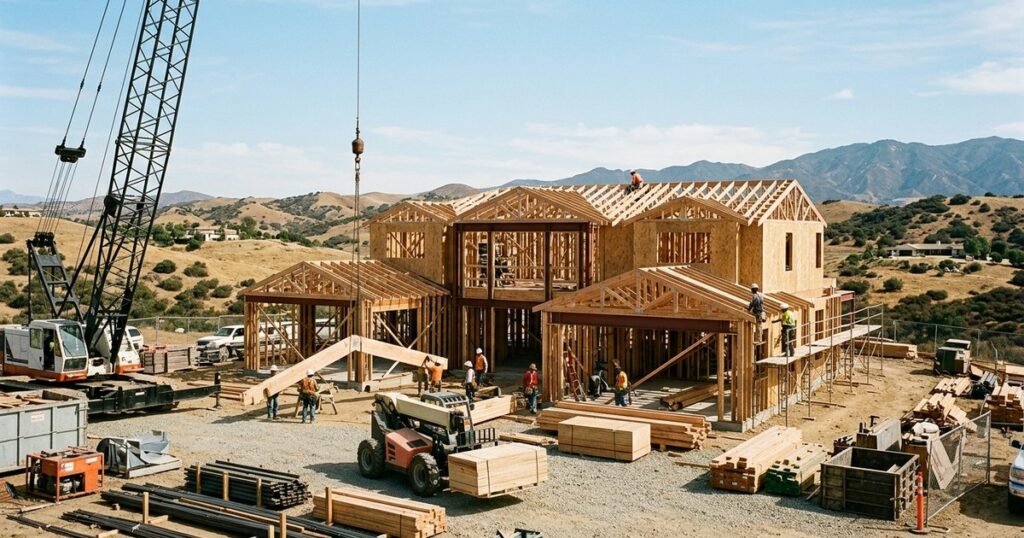
Over seven thousand structures disappeared in Napa in the span of a couple of days. Every one of those owners needed the same trades at roughly the same time: framers, roofers, electricians, plumbers, finish carpenters. Ordinary bidding assumes a builder can choose between jobs at a normal pace. After a disaster, that assumption breaks, because everyone with a loss is trying to rebuild on a similar timeline, insurance clock included.
The result is a genuine supply and demand imbalance, not a temporary price adjustment. Contractors are not padding their bids opportunistically. They are pricing in the real cost of retaining crews who have better offers arriving weekly.
The San Diego Builder Who Saw It Coming
Not everyone treated this as a problem. I know one builder from San Diego who read the situation early, moved his operation north, and ended up building eighty homes in the rebuild.
At the time, I remember thinking it was an aggressive move. Four years later, it was obviously the right one. He and his son had been in the business long enough to understand how these cycles move, and they got there before the demand curve did rather than after it.
I bring this up not because everyone should chase the next disaster market, but because it illustrates something buyers and remodelers should understand: when demand spikes this hard, the builders and tradespeople with the most experience and the deepest relationships move first, and everyone else is competing for what is left.
Why the Palisades Fire Matters to San Diego Right Now
This is not a historical lesson. It is happening again, closer to home.
The Palisades fire in Los Angeles destroyed roughly sixty five hundred units, and rebuilding there is now ramping up. If a contractor in San Diego is billing two hundred to two hundred fifty dollars an hour and gets a call offering three hundred an hour to come work in Los Angeles for six months, most are going to take it. That is exactly what pulled San Diego-area labor north to Napa a few years ago, and it is the same dynamic pulling labor toward Los Angeles today.
If you are planning to build or substantially remodel in Rancho Santa Fe, La Jolla, or Del Mar in the near term, this is a live factor in your project, not a background one.
How to Budget and Time a Project in an Unstable Labor Market
A few practical adjustments follow directly from all of this.
Treat every bid as a snapshot, not a guarantee, especially on a project with a long approvals runway ahead of it. The gap between the bid you collect today and the price you actually pay when you break ground can be substantial if regional demand shifts in between.
Lean on relationships rather than the lowest number on paper. A builder who has worked with you before, or with your architect before, has more reason to hold a price and prioritize your job when demand elsewhere spikes. That is a large part of why I keep the same small circle of architects, engineers, and builders on project after project. See the full building and remodeling guide for how that team comes together.
Finally, build a real contingency into any construction budget, not a token five percent. A labor market shock is not a risk you can eliminate. It is a risk you can plan for.
What This Means for Rancho Santa Fe, La Jolla, and Del Mar Owners Today
None of this means you should not build or remodel here. It means you should go in with your eyes open about a cost driver that has nothing to do with your specific property.
If a regional fire, here or elsewhere in the state, pulls labor away while your project is in the approvals pipeline, your final construction cost can move meaningfully before you ever pick up a hammer. Planning for that possibility, rather than being surprised by it, is the difference between a project that stays on budget and one that does not.
If you are weighing the timing of a build or remodel in this market, reach out and I will talk through it with you.
Frequently Asked Questions
Why do construction bids increase after a regional wildfire?
A major fire destroys a large number of structures at once, creating sudden, concentrated demand for the same trades: framers, roofers, electricians, and finish crews. Contractors can command higher prices, and existing bids from before the disaster often no longer hold once the actual rebuilding period begins.
Did this happen after the Napa fires?
Yes. Bids collected before the fire in some cases doubled or tripled by the time the actual rebuild began, largely because contractors were being offered cash bonuses to leave committed jobs for new ones.
How does the Palisades fire in Los Angeles affect construction costs in San Diego?
Large-scale rebuilding after the Palisades fire is drawing contractors and skilled labor out of nearby markets, including San Diego, with higher hourly rates. That reduces the local labor supply and can raise bid prices here even though the fire itself was in a different region.
Can I lock in a construction bid before starting the approvals process?
You may get a bid in writing, but treat it as a snapshot rather than a guarantee, particularly on a project with a long approvals timeline. Labor market conditions can shift meaningfully between the bid and the actual start of construction.
How should I budget for labor cost uncertainty on a build or remodel?
Build a real contingency into the construction budget rather than a token amount, and revisit pricing closer to the actual start date rather than relying solely on an early bid.
Does working with the same architects and builders repeatedly help with pricing?
It can. Contractors and design professionals who have an ongoing relationship with an agent or a repeat client have more reason to hold pricing and prioritize that work when regional demand spikes elsewhere.
Is this only a concern for ground-up new construction?
Not always. Substantial remodels compete for many of the same trades as new construction, particularly framers, electricians, and plumbers, so a regional labor shortage affects both types of projects.
Where should I start if I am planning a build or remodel in the next year or two?
Start the conversation early, get current market pricing rather than relying on older estimates, and factor regional demand shocks, wherever they are occurring in the state, into the budget and the timeline from the outset.
The Fire You Are Not Watching Can Still Raise Your Bid
Most buyers assume construction costs are a local, static number. They are not. They move with regional demand shocks, and right now that means a fire in Los Angeles can raise the price of a remodel in Rancho Santa Fe.
If you are planning a project and want a realistic read on current pricing and timing, start a conversation with Scott Union.
About the Author
Scott Union has been selling real estate in Rancho Santa Fe, La Jolla, and Del Mar since 1980, and living in these communities since 1970. He opened his own brokerage in 1984 and today leads Compass – Union West RE Group, where every client works with him directly alongside Realtor Morgana Taylor, not with an assistant or the next agent in training.
Most of what he writes here comes from his own ledger rather than from a market report. He has owned, built, or renovated more than twenty properties across these markets, including two custom homes built from the ground up. When he moved to Rancho Santa Fe in 1988 he waited seven years before showing his first house there, because he does not sell a market he does not know cold.
In 2023 he closed $99,274,400 and was named the number 8 agent in San Diego by sales volume, featured that year on the America’s Best list.
Scott Union, Broker Associate, Compass. California DRE #00808482. Rancho Santa Fe, California. (858) 518-9663.