
How the Mills Act Cut One Rancho Santa Fe Property Tax Bill From Thirty Thousand Dollars to Five Thousand
Most buyers hear that a house might be considered historic and treat it as a problem. Sometimes it is exactly that. But Mills Act property tax savings in San Diego can be large enough to change the economics of a purchase entirely, and in my experience the seller and the listing agent frequently have no idea the option exists.
Summary. The Mills Act is a California program that reduces property tax on designated historic homes in exchange for maintaining them. On one Rancho Santa Fe property the annual bill fell from roughly thirty thousand dollars to about five thousand two hundred. The same designation that creates the saving also restricts what an owner may change.
Why Historic Designation Became a Real Risk in La Jolla
Over the last twenty years buyers and local groups have become far more sensitive to the architectural history of these communities, and the practical bar has moved.
The old rule of thumb was that a house under fifty years old was not historic unless it was designed by or lived in by someone famous, and if that person was still living, nobody cared. That is no longer where we are. It does not require a household name. It requires an architectural group that believes the designer was talented.
A great many of the genuinely interesting older houses in La Jolla are now past fifty years. If one of them is deemed historic, you will not be making the changes you had in mind, and you will certainly not be taking it down. You can end up owning a house that nobody will permit you to make practical.
Why the Same House Is Treated Differently in Del Mar
Geography matters enormously here, and the difference between two towns a few miles apart is larger than most buyers expect.
In La Jolla you are dealing with the City of San Diego reviewing the question, plus local groups that will challenge a project and want a say in it. Del Mar, as a city, does not acknowledge historic designation in the same way. It is the only town in this area I am aware of that takes that position, and it gives owners there real freedom.
I redesigned and resold a John Lloyd Wright house in Del Mar and the city did not fight us on it. We were straightforward about the fact that he had built it. Had that identical house been sitting in La Jolla, I do not believe we would have been allowed to touch it.
So the same architectural pedigree is a constraint in one town and a non issue in the next. That is not intuitive, and it is worth establishing before you fall in love with a property. The La Jolla market guide covers the wider set of approvals that apply on the coast.
What the Mills Act Actually Trades
Now the other side of it, because designation is not purely a burden.
The Mills Act is a California program that allows local governments to enter into a contract with the owner of a qualified historic property. The owner agrees to maintain and preserve the property. In exchange, the assessor uses an alternative valuation method that in practice can reduce the annual property tax substantially. The California Office of Historic Preservation publishes the program overview at ohp.parks.ca.gov.
In plain terms, you put a plaque on the house, you agree to keep the exterior facade immaculate so the public can appreciate it, and you accept limits on what you may alter. What you receive is a permanent change in the annual carrying cost of the property.
It is a genuine trade rather than free money. If your intention is to gut the house and reshape it, this is the wrong path. If you like the house as it is, the arithmetic can be remarkable.
The Rancho Santa Fe Row House and the Actual Numbers
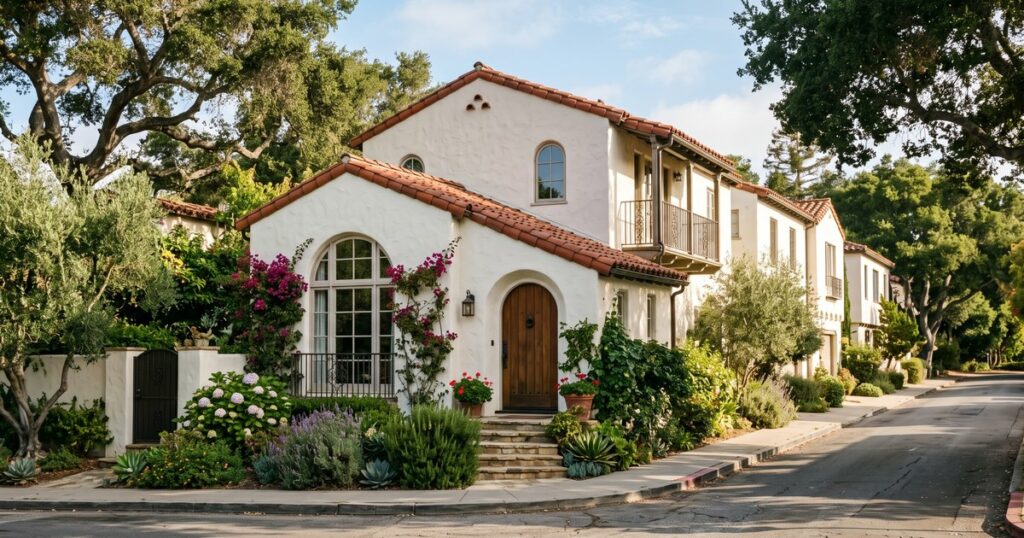
I owned a Lillian Rice row house in Rancho Santa Fe. These were small houses built in the 1920s for the workers who were building the town, designed by Lillian Rice, the architect who designed most of the main Village.
It is restricted, and I did not mind in the least, because she was so good at it that I did not want to change anything about it.
I had a Lilian Rice row house in Rancho Santa Fe. It is deemed historic, so you are restricted as to what you can do, but she was so good at it. In my case, I did not want to change anything. I thought it was great.
Scott Union, Compass – Union West RE Group
I sold that property three times after I owned it. The third owner pursued the designation. On a basis of roughly two and a half million dollars, an ordinary California property tax bill runs in the neighborhood of thirty thousand dollars a year at approximately one percent. That property pays about five thousand two hundred.
That is not a one time credit. It repeats annually, and it travels with the property to the next owner under the contract.
This article describes one owner’s experience and is not tax or legal advice. Property tax outcomes depend on the specific property, the assessor, and the municipality. Consult a qualified tax advisor or attorney about your own situation before relying on any figure here.
What to Establish Before You Close Escrow
The mistake I see most often is that a buyer falls in love with an older house, closes, and only then discovers what they are permitted to do with it. By that point every option has narrowed.
Start by separating the two cases, because they carry completely different risk. If you love the house as it stands and intend to keep it that way, you are in the low risk position and designation may be an outright benefit. If you love the lot, the exposure, and the house you can picture replacing it with, then every restriction on the property is a direct threat to the plan you are paying for.
In the second case, establish the answers during your contingency period rather than after. Find out which jurisdiction reviews the property and whether local groups participate in that review. Find out whether the house is already inventoried or has ever been evaluated. Ask the planning department directly whether the age and the designer would trigger review on a demolition or a substantial exterior alteration.
On the coast there are usually further layers stacked on top. A property may sit inside a planned district, fall under the Coastal Commission, trigger hillside review, or carry fire department requirements for defensible space. Any one of those can reshape what is buildable.
You may well find the property is not what you thought it was. The time to learn that is while you still have a contingency and a deposit you can walk away with.
Where These Properties Actually Turn Up
Here is the part that is genuinely counterintuitive, and it is the reason I still look for these myself.
If a qualifying property does not already have a Mills Act contract on it, that usually tells me that neither the seller nor the listing agent knows the program exists. On a three million dollar property the difference can be in the region of twenty seven thousand dollars a year, and it shows up in the price the moment the next buyer runs the numbers properly.
Enough people have worked this out that they are not easy to find. But the best hunting is not in La Jolla or Del Mar. It is in the communities where nobody is thinking about architects at all, because sensitivity to notable designers concentrates in the highest end neighborhoods and leaves everywhere else comparatively unexamined.
Availability, eligibility, and the size of any reduction vary by municipality and by property, and several San Diego County jurisdictions cap the number of contracts they will issue. That is a question to put to the local planning department and a qualified tax advisor early rather than late.
If you are looking at an older property in these markets and want to know which category it falls into, get in touch and I will take a look at it with you.
Frequently Asked Questions
What is the Mills Act in California?
The Mills Act is a state program that lets local governments contract with owners of qualified historic properties. The owner agrees to preserve and maintain the property, and in exchange the assessor applies an alternative valuation method that can significantly reduce the annual property tax. Participation is administered locally rather than statewide.
How much can a Mills Act contract reduce a property tax bill?
It varies by property and jurisdiction. On one Rancho Santa Fe property with a basis around two and a half million dollars, the ordinary bill would have been near thirty thousand dollars a year and the property instead pays about five thousand two hundred. Outcomes differ, and a qualified tax advisor should review any specific case.
What does an owner give up under a Mills Act contract?
The owner accepts restrictions on altering the property, particularly the exterior, and takes on an obligation to maintain and preserve it. The contract also runs with the property rather than the owner. If the plan is to substantially remodel or demolish, the program is the wrong fit.
Why is historic designation harder to deal with in La Jolla than in Del Mar?
In La Jolla an owner may face review by the City of San Diego along with local groups that challenge projects and seek input on them. Del Mar as a city rarely acknowledges residential historic designation in the same manner, which gives owners there noticeably more freedom to alter a property of similar age and pedigree.
Of course, during the contingency period we hired a Historic Real Estate Attorney who researched and wrote a strong opinion as to why the property should not be considered historic. For Del Mar, that is as close to guaranteed as you can get.
Does a historic designation always reduce a property’s value?
Not always. It reduces flexibility, which matters a great deal to a buyer who intends to redevelop and very little to a buyer who wants the house as it stands. When a Mills Act contract is available, the reduced carrying cost can more than offset the restriction for the right owner.
How do I find out whether a house qualifies as historic?
Start with the local planning department for the jurisdiction the property sits in, since criteria and review processes are set locally. Age alone is not determinative. Architectural significance, the designer, and integrity of the original design all factor in, and a property can be eligible without having been formally designated.
Can a buyer apply for the Mills Act after purchasing a property?
In many jurisdictions yes, provided the property qualifies and the municipality is still issuing contracts. Some jurisdictions cap the number they will grant in a given period. Because timing and availability vary, this is worth confirming with the planning department before closing rather than after.
Who was Lilian Rice and why do her buildings matter in Rancho Santa Fe?
Lilian Rice was the architect who designed much of the original village of Rancho Santa Fe in the 1920s, including small row houses originally built to house the workers constructing the community. Her buildings are among the most recognized historic architecture in the area, which is why properties attributed to her draw designation interest.
The Question Is Not Whether It Is Historic
If you are looking at an older house anywhere in these markets, the useful question is not simply whether it carries a historic designation today.
It is whether it could, what that would prevent you from doing, and what it would be worth to you annually if you were never going to make those changes anyway. Those three answers together tell you whether you are looking at a constraint or at one of the better carrying cost arrangements available on a California property.
Most buyers only ever ask the first question, and they walk away from properties that would have suited them perfectly.
If you want a read on a specific older property in La Jolla, Del Mar, or Rancho Santa Fe, start a conversation with Scott Union.
About the Author
Scott Union has been selling real estate in Rancho Santa Fe, La Jolla, and Del Mar since 1980, and living in these communities since 1970. He opened his own brokerage in 1984 and today leads Compass – Union West RE Group, where every client works with him directly alongside Realtor Morgana Taylor, not with an assistant or the next agent in training.
Most of what he writes here comes from his own ledger rather than from a market report. He has owned, built, or renovated more than twenty properties across these markets, including two custom homes built from the ground up. When he moved to Rancho Santa Fe in 1988 he waited seven years before showing his first house there, because he does not sell a market he does not know cold.
In 2023 he closed $99,274,400 and was named the number 8 agent in San Diego by sales volume, featured that year on the America’s Best list.
Scott Union, Broker Associate, Compass. California DRE #00808482. Rancho Santa Fe, California. (858) 518-9663.