What Losing My Home to Fire Taught Me About Insuring and Building in High Fire Risk California
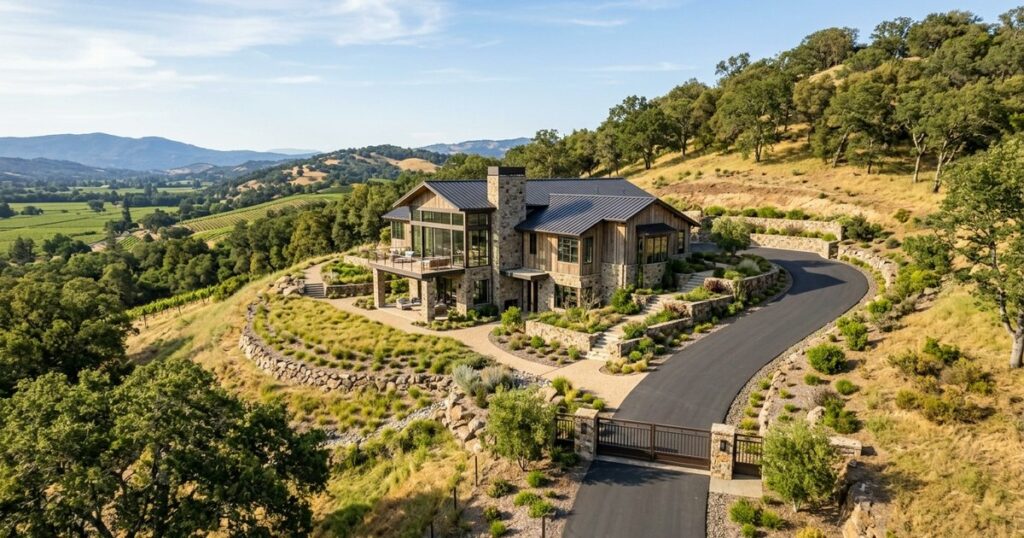
In October 2017 I lost my house in Napa to fire. I am telling you that up front because everything else in this article is downstream of it, and because the two lessons it taught me, about fire department engagement and about insurance, apply directly to anyone buying or building in Rancho Santa Fe, La Jolla, or Del Mar today. These are not wildland-Napa problems anymore. They are showing up here.
Summary. Losing a home to fire and rebuilding it taught Scott Union two things most buyers do not budget for: bring the fire department into the design at the very beginning, and treat insurance as its own project, not a line item. Major carriers are leaving high fire risk parts of California, the state FAIR Plan has real limits, and insurers are now pricing individual properties rather than whole neighborhoods.
The Fire, and the Mile of Shared Road That Changed How I Rebuilt
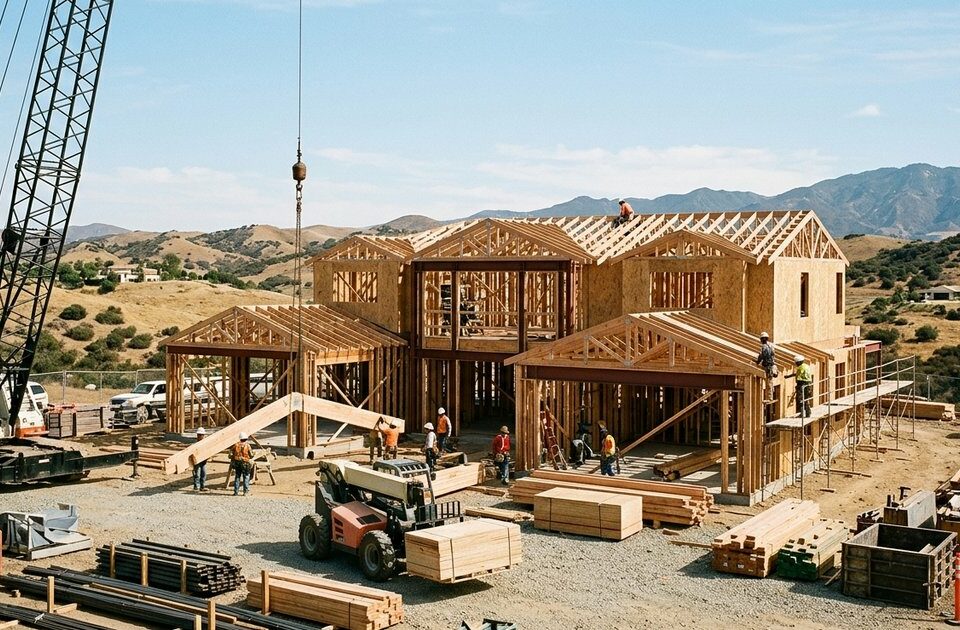
Our property sits a mile off the main road, the last half mile of it shared with three other properties. When we started planning the rebuild, I called the fire chief directly and asked him what our access would need to look like if we were required to meet current code.
He wrote it out for me. I took that list to a contractor and to my neighbors, and we agreed to add gravel and passing areas along the shared stretch. It was a relatively minor expense, and every neighbor volunteered to help pay for it, because the benefit was obvious to all of us once we could see it in writing.
That decision was not required. We were not under a citation or a deadline. We did it because I understood, from having just been through a fire, that in the event of a second one, the fire department is more willing to come defend a property they know they will not get stuck on. That is not a design choice most people think about until they have lived through the alternative.
Bringing the Fire Department In at the Start, Not the End
The old model, in my experience, was that fire department review happened near the end of a project. You invited them out once the design was set, they made a suggestion or two, and they signed off. That model is gone in a genuinely high fire risk area.
Rancho Santa Fe is high risk. La Jolla and Del Mar are becoming higher risk. On our second Napa house, I brought the builder and the interior designer in together at the very beginning, and the landscape architect was part of that same conversation, because landscape architects deal with the fire department more than the architect typically does. Everyone had equal input from day one.
The smart person now brings the fire department in at the very beginning, not at the end, because that used to be a box you checked and now it genuinely shapes the design.
Scott Union, Compass – Union West RE Group
It also shaped decisions most buyers would never think to ask about. We repositioned the new house slightly further south from where the original sat, and we angled the primary bedroom wing so that if fire approached the property the same way the fire that took our first house did, embers would deflect off the structure and continue moving rather than pile up against it. That is a design conversation that only happens if the fire department, or someone who thinks the way they do, is in the room from the start.
The Insurance Surprise Nobody Warned Me About
I thought I had handled the risk side of this by working with the fire department. What I had not thought through was insurance, and it turned out to be the harder problem.
We carried AIG through the fire, and California law kept them on our policy because our property was inside a declared federal disaster zone. I assumed, because I had not been told otherwise, that coverage would simply continue once we rebuilt. We finished construction in 2021, having started in 2019. In 2023, we received a notice of non-renewal. AIG was leaving the state of California entirely, and no one else would even look at us.
If you are buying, building, or holding property in a high fire risk part of the San Diego coast, that is the piece to budget for before you write an offer, not after you close.
Inside the California FAIR Plan, and Where It Runs Out
With no standard carrier willing to write us a policy, we went to the California FAIR Plan. It is genuinely useful coverage if the property and its contents total three million dollars or less. Above that number it gets complicated fast.
The FAIR Plan caps out at that figure, and it has provisions that can catch an owner by surprise. If your coverage is capped at three million and your home appraises at six, the FAIR Plan can determine you are underinsured by fifty percent, which means a claim that should pay three million could instead pay something closer to half of that, while you have been paying a very large premium for coverage you assumed was complete.
That gap in the market is exactly what created an opening for a different category of carrier: companies that are not approved by the state of California but are legally permitted to operate here, known as non-admitted carriers. Evaluating one of those is not a job for a generalist agent. It requires an insurance specialist who understands both the coverage terms and the carrier’s actual financial ability to pay out after a major loss, which matters just as much as the premium quoted.
Coverage structures, caps, and underinsurance rules change and vary by carrier and by property. Confirm current FAIR Plan terms directly with a licensed insurance specialist before relying on any figure here.
Building the Case That Got Us Covered Again
The insurance market is also getting smarter about reading individual properties rather than pricing an entire neighborhood the same way, and that cuts both ways for an owner.
Every house immediately around ours in Napa burned in the same fire and was rebuilt to current code, which is a real advantage over an older home standing untouched in the same area. I put together a documentation package, roughly twenty pages, laying out every reason our specific property was a lower risk going forward: current construction standards, the road and access work, the defensible space we maintained.
I routed that package through an experienced insurance agent rather than trying to reach a carrier directly, because it is genuinely difficult to get in front of the right person without one. The agent got a representative from the carrier to actually tour the property, rather than price it off a map. We have carried continuous coverage with a better carrier for the last two years since.
The lesson generalizes past Napa. If you own or are considering a property in a wildland-adjacent part of Rancho Santa Fe, La Jolla, or Del Mar, the same documentation approach applies: the more specifically you can show a carrier why your property is lower risk than its zip code average, the more negotiating room you have.
What This Means If You Are Buying or Building Here Today
None of this is a reason to avoid these markets. I still live in one of them. It is a reason to treat fire and insurance as their own line items in the plan, alongside the architect and the contractor, rather than as an afterthought.
Concretely: bring the fire department, or someone who thinks the way they do, into the design conversation at the start of any project, not the end. Ask early what an insurance carrier will actually require to keep you covered, not just to write the first policy. And if you are buying an older home in a wildland-adjacent area, ask the current owner directly about their insurance history, because a non-renewal notice on a comparable property nearby is information you want before you are in contract, not after.
If you are weighing a purchase or a rebuild in a fire-exposed part of Rancho Santa Fe, La Jolla, or Del Mar and want to talk through what that actually means for your specific property, reach out and I will walk it with you. For the wider picture on building and remodeling in these markets, see the full building and remodeling guide.
Frequently Asked Questions
What happened to Scott Union’s home in Napa?
It was lost to a wildfire in October 2017. The rebuild took several years, and the process of navigating fire department requirements and insurance during and after that rebuild shaped the advice in this article.
Why does a fire in Napa matter for buyers in Rancho Santa Fe, La Jolla, or Del Mar?
Rancho Santa Fe is already classified as high fire risk, and La Jolla and Del Mar are trending in the same direction. The insurance and design lessons from a high fire risk property in one part of California generally apply to any high fire risk property in the state.
What is the California FAIR Plan?
It is the state’s insurer of last resort for property owners who cannot obtain coverage through the standard market, often because of wildfire exposure. It provides real coverage, but it carries a cap, and properties valued above that cap can face underinsurance provisions that reduce an actual payout.
What is a non-admitted insurance carrier?
A non-admitted carrier is an insurer not formally approved by the State of California but legally permitted to write policies here. These carriers can fill gaps the standard market leaves in high fire risk areas, but evaluating their terms and financial strength is specialized work best handled by an experienced insurance agent rather than attempted alone.
How can a homeowner make the case that their property is lower risk?
By documenting specific, verifiable factors: current construction standards, defensible space maintained around the structure, road and access improvements, and anything else that distinguishes the property from its neighborhood average. Routing that documentation through an experienced agent, rather than approaching a carrier directly, tends to produce a better result.
When should the fire department be involved in a building or remodeling project?
At the very beginning, alongside the architect, builder, and landscape architect, rather than at the end as a final sign-off. In a high fire risk area this can influence siting, orientation, and access decisions that are far more expensive to change once construction has started.
Can road or access improvements affect insurance or fire department response?
They can. Improving access on a shared or remote road, so that fire equipment can safely reach and leave a property, is the kind of documented risk mitigation that both a fire department and an insurance carrier can weigh favorably, even when the improvement is not required by code.
Where should someone start if they are worried about insurability on a specific property?
Start with a conversation with an insurance specialist, not a generalist agent, before writing an offer or breaking ground. Ask directly about that property’s insurance history if it is already built, and treat the answer as seriously as the inspection report.
The Fire Was the Easy Part
Rebuilding the house was, in a strange way, the straightforward piece. The fire department relationship and the insurance fight were the parts nobody prepared me for, and they are exactly the parts most buyers in these markets are not thinking about yet.
That is changing, because the risk is changing. If you want an honest conversation about what that means for a specific property in Rancho Santa Fe, La Jolla, or Del Mar, start a conversation with Scott Union.
About the Author
Scott Union has been selling real estate in Rancho Santa Fe, La Jolla, and Del Mar since 1980, and living in these communities since 1970. He opened his own brokerage in 1984 and today leads Compass – Union West RE Group, where every client works with him directly alongside Realtor Morgana Taylor, not with an assistant or the next agent in training.
Most of what he writes here comes from his own ledger rather than from a market report. He has owned, built, or renovated more than twenty properties across these markets, including two custom homes built from the ground up. When he moved to Rancho Santa Fe in 1988 he waited seven years before showing his first house there, because he does not sell a market he does not know cold.
In 2023 he closed $99,274,400 and was named the number 8 agent in San Diego by sales volume, featured that year on the America’s Best list.
Scott Union, Broker Associate, Compass. California DRE #00808482. Rancho Santa Fe, California. (858) 518-9663.